

galvanised water tanks
Upcycling Galvanised Water Tanks

Aug
Upcycling guide
Upcycling Galvanised Water Tanks
Galvanised water tanks are more than old farm or industrial relics. They are durable, practical and full of reuse potential. This guide explains what makes them so useful, where they traditionally came from, and how to turn reclaimed tanks into garden features, planters, storage, livestock equipment, water features and even outdoor cooking stations.
As interest in reuse, salvage and outdoor living continues to grow, upcycling galvanised water tanks has become a strong opportunity for homeowners, designers, landscapers and makers looking for materials with both substance and story.
Introduction to Upcycling Galvanised Water Tanks

Galvanised water tanks have been a fixture in agricultural, industrial and residential settings for decades. Traditionally, they were valued for one main reason: dependable water storage. However, as sustainability becomes a bigger part of how people build, furnish and landscape spaces, these tanks are being viewed differently.
Instead of seeing an old tank as redundant, more buyers now recognise it as a raw material with serious reuse value. Therefore, upcycling galvanised water tanks is no longer a niche idea. It is becoming a practical design move for people who want distinctive, durable and genuinely reclaimed pieces.
Why this matters: a reclaimed galvanised tank can function as storage, furniture, planting space, a feature BBQ, a pond or a trough, all while reducing waste and bringing a far stronger sense of character than a mass-produced alternative.
Characteristics and Uses of Galvanised Water Tanks
Material Composition and Benefits
Galvanised water tanks are primarily made from steel coated with zinc. That galvanised finish is what gives the tank its distinctive appearance and much of its practical resilience.
- Corrosion Resistance: the zinc coating helps protect the steel from moisture and air, slowing down rust formation.
- Durability: the steel core gives the tank real strength, which is why many survive decades of use.
- Cost-Effectiveness: compared with some modern materials, galvanised tanks have long offered robust value.
- Versatility: they come in a range of sizes and forms, which makes them well suited to different reuse projects.
Traditional Uses
Before they became desirable upcycling pieces, galvanised tanks were most often used in practical working environments.
- Agriculture: for irrigation, livestock watering and general farm water storage.
- Industrial settings: for process water, site storage and emergency water requirements.
- Residential properties: for rainwater harvesting and backup storage, especially in more remote locations.
- Fire protection: larger tanks were also useful where an immediate reserve of water was needed.
Old tanks, new roles
Reclaimed galvanised tanks can move from hard-working utility pieces to standout garden and outdoor-living features with surprisingly little intervention.
Why Upcycling Makes So Much Sense

As galvanised tanks age out of their original role or become surplus to requirement, they create an ideal upcycling opportunity. First, they are materially robust. Secondly, they usually have a scale and visual presence that suits both outdoor and interior design projects. Finally, they already carry the weathered finish and industrial authenticity that people often try to imitate with new products.
In other words, upcycling a galvanised water tank allows you to keep a useful material in circulation while creating something that feels distinctive, practical and genuinely reclaimed.
Garden Beds and Planters
One of the most popular ways to reuse a galvanised water tank is to convert it into a raised planter or garden bed. Because the tank is already sturdy and visually striking, this is a relatively straightforward conversion with strong aesthetic payoff.
Benefits
- Elevated growing space: easier on the back and knees than ground-level gardening.
- Better definition: ideal for creating strong visual zones in gardens, courtyards and patios.
- Rustic character: the aged galvanised finish works beautifully in both rural and contemporary outdoor schemes.
Simple Process
- Preparation: clean the tank thoroughly and drill drainage holes if needed.
- Placement: position it in a suitable location with the right balance of light and shelter.
- Base layer: add gravel or stones to help drainage.
- Filling and planting: add quality growing medium and plant to suit the scheme.
Outdoor Furniture
Galvanised water tanks can also be turned into distinctive pieces of outdoor furniture. With careful cutting and adaptation, they can become seating, tables, benches or statement storage-led furniture pieces for gardens and entertaining spaces.
Benefits
- Durability: the core tank structure is already designed to cope with tough environments.
- Custom potential: tanks can be cut, shortened or paired with timber to create one-off furniture pieces.
- Strong visual identity: ideal for industrial, rustic and reclaimed-led schemes.
Typical Process
- Design: decide whether the tank becomes seating, a table base or a storage-led feature.
- Cutting and shaping: use the appropriate tools and safe methods to modify the tank.
- Edge refinement: smooth all cut edges carefully.
- Assembly: pair with timber, steel or other materials as required.
Feature BBQ or Smoker Grills
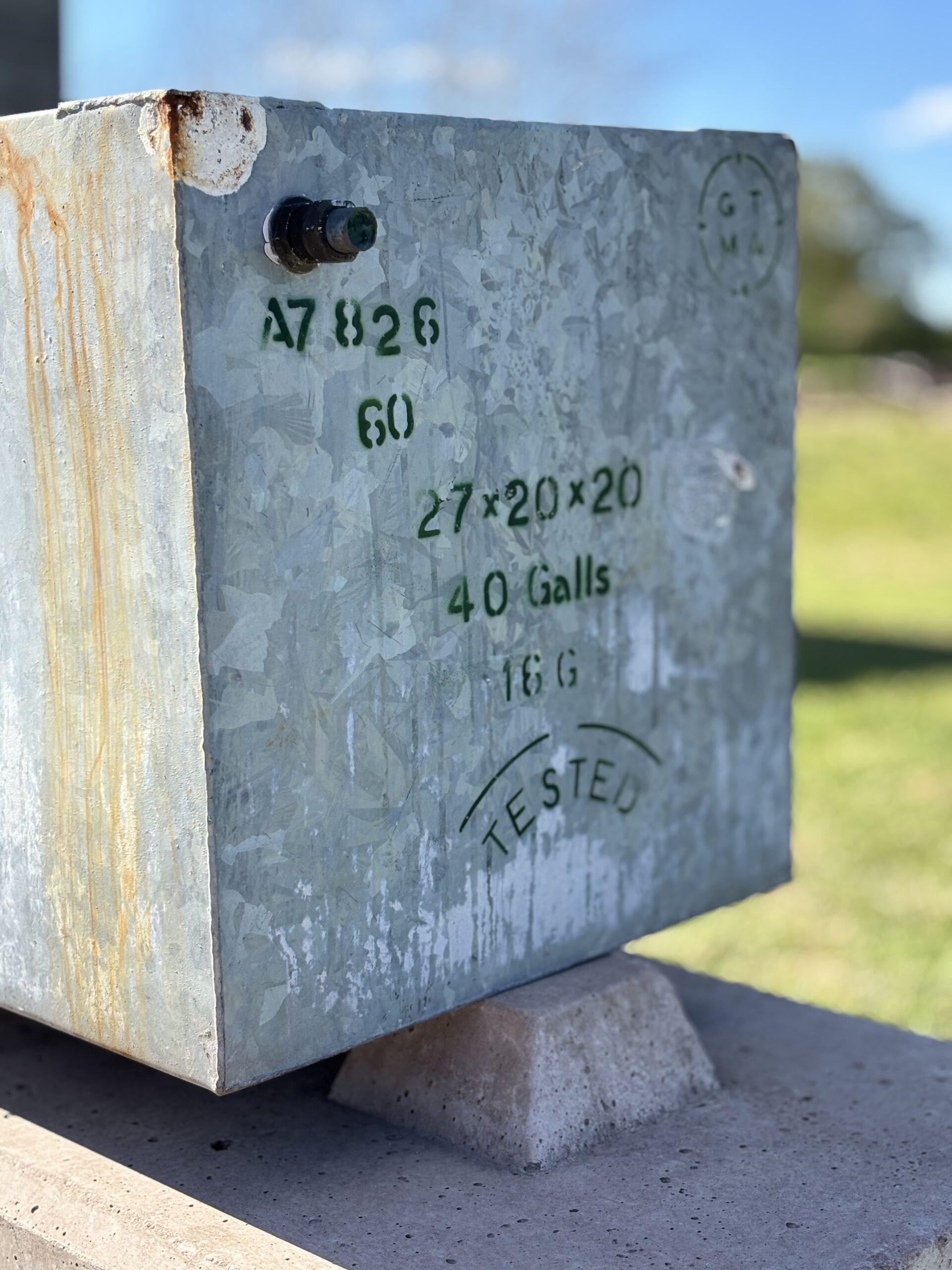
One of the more characterful reuse ideas is turning a galvanised water tank into a feature BBQ or smoker grill. For gardens, entertaining areas and outdoor-living spaces, this can create a highly distinctive focal point that feels far more original than an off-the-shelf barbecue.
In simple terms, galvanised water tanks can be adapted into smokers or BBQs by introducing a protected fire zone, airflow and a cooking surface. For example, you might line the base and lower sides with refractory bricks, fit a grill above, drill vent holes for air supply and then fire it using logs.
To get it going, you can use the best natural firelighters and create a genuinely bespoke outdoor cooker with serious reclaimed character.
Design note: any live-fire conversion needs proper thought around heat, lining, ventilation, safe modification and suitability of materials. However, as a creative reclaimed-object idea, the potential is huge.
Water Features
Creating a pond, fountain or bird-bath style feature is another strong use for reclaimed galvanised tanks. Because the form is already self-contained, tanks are naturally suited to water-led landscaping ideas.
- Aesthetic enhancement: water features add movement, calm and visual interest.
- Wildlife support: they can help attract birds and beneficial garden wildlife.
- Material character: the aged tank finish adds depth and authenticity that plastic alternatives cannot match.
Depending on the design, you may seal the tank, install a pump, add planting and use stone or reclaimed accessories to build a stronger landscape feature around it.
Storage Solutions
Galvanised tanks can also be repurposed into outdoor storage for tools, logs, kindling, hoses or general garden equipment. In many cases, the conversion needed is fairly minimal, which makes this one of the easiest and most practical forms of upcycling.
- Organisation: helps keep outdoor areas cleaner and more structured.
- Weather protection: tanks offer more protection than open shelving or improvised piles.
- Visual appeal: even simple storage looks more intentional when housed in a reclaimed tank.
Livestock Troughs and Feeders
For farms, smallholdings and rural properties, old galvanised tanks remain highly useful in their more traditional territory. Cut down and adapted properly, they can become troughs or feeders for livestock and pets.
- Cost-effective reuse: often cheaper than purchasing new specialist equipment.
- Durability: suited to outdoor wear and daily use by animals.
- Practical scale: larger tanks can serve multiple animals efficiently.
Compost Bins
Another strong sustainability-led reuse is turning a galvanised tank into a compost bin. This keeps organic waste cycling back into the garden while making use of a reclaimed structure that still has plenty of life left in it.
- Supports sustainable gardening: helps recycle kitchen and garden waste.
- Produces nutrient-rich compost: useful for beds, borders and planters.
- Long-lasting container: stronger and more visually pleasing than many plastic bins.
Indoor Decor Possibilities
Smaller galvanised tanks, or sections of larger ones, can also move indoors. For example, they can become planters, lamp bases, storage bins or decorative pieces in industrial, rustic or workshop-inspired interiors.
This works particularly well where the aim is to create a home or commercial space with material honesty, texture and a sense of history rather than a polished, over-manufactured finish.
Conclusion
Galvanised water tanks offer far more than basic water storage. Their durability, visual character and adaptable form make them an excellent foundation for all sorts of reuse projects. Whether you turn one into a planter, a storage unit, a pond, a trough, a smoker grill or a furniture feature, the result can be both practical and visually distinctive.
More importantly, upcycling galvanised water tanks keeps valuable materials in circulation. Instead of heading for scrap or being forgotten at the back of a yard, they can become useful and attractive assets once again.
