

informative posts, Ironmongery
Door Handles & Backplates
Aug
Ironmongery series
Vintage Door Handles & Backplates: Choosing the Right Reclaimed Style
Reclaimed door handles and backplates bring period authenticity, visual depth and tactile quality to doors in both traditional and modern homes. This guide explains the main styles, fixing pitches, latch types and finishes—so you can choose with confidence and avoid the common compatibility mistakes that turn a simple hardware swap into a frustrating job.
Why reclaimed door furniture still matters
Door furniture is one of the most handled details in any building, yet it is often chosen last. The right reclaimed handle does more than open a door. It reinforces the age, character and architectural language of the room around it.
Vintage door handles and backplates are especially useful when restoring period properties, replacing poor-quality modern hardware, or adding more depth and texture to newer interiors. Whether you prefer ornate Victorian detailing, a more restrained Edwardian look, or the crisp geometry of Art Deco hardware, reclaimed ironmongery can change the whole feel of a door for relatively little cost.
Period styles of reclaimed handles
- Georgian & Regency: simple round knobs, usually in brass or bronze, often elegant rather than ornate.
- Victorian: more decorative backplates with beaded, fluted or scroll-style detailing.
- Edwardian: slimmer, lighter proportions, often with ceramic and brass combinations.
- Art Deco: geometric backplates, stepped edges and a chrome or brass mix.
- Mid-century: streamlined levers and cleaner escutcheon details with less ornament.
Match reclaimed handles to the age and character of the door wherever possible. That may mean staying period-correct, or it may mean deliberately creating contrast if the wider interior scheme supports it.
For broader category browsing, start with the main Ironmongery range, then consider how the chosen finish will work alongside reclaimed or traditional Doors & Windows.
Fixing pitches & compatibility
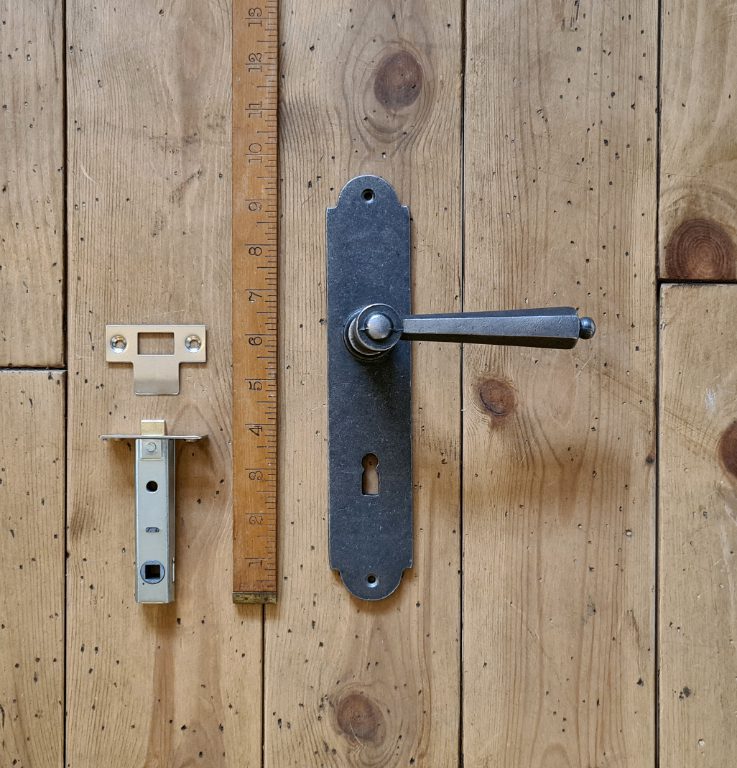
Backplates usually have two fixing screws aligned vertically. Before buying replacements, measure the pitch, which is the distance between the centres of the screw holes. This is one of the easiest details to overlook and one of the most common causes of mismatch.
- Common reclaimed pitches: 120 mm, 150 mm and 165 mm.
- If there is a mismatch: plug and fill old holes, then re-drill to suit the new handle pitch.
- Round roses: typically use two offset screws and are usually easier to swap between designs.
If you are replacing hardware across multiple rooms, it is worth checking every door rather than assuming they all match. Older properties often have a surprising mix of historic alterations.
Latch & lock types
Handles need to work with the correct latch or lock body. A beautiful reclaimed backplate is of little use if the spindle, latch case or keyhole position does not line up with the door preparation.
- Latch handles: operated by a sprung latch and usually used on internal doors.
- Lock handles: include a keyhole cut-out and must match the lock backset, commonly 44 mm, 57 mm or 64 mm.
- Bathroom sets: paired with turn-and-release fittings, privacy bolts or mortice bathroom locks.
When in doubt, remove one existing handle and measure everything before ordering. It is far easier to buy once than to retrofit the wrong set across a door that has already been stripped and prepared.
Finishes & care
The finish of reclaimed hardware affects both appearance and maintenance. Some people want a brighter cleaned look, while others want to preserve age and patina. Both approaches can work, as long as they are deliberate.
- Brass: polish lightly if required, then seal with wax to slow tarnishing.
- Cast iron: clean gently, then oil or wax to help protect against rust.
- Chrome or nickel: buff carefully and avoid abrasive cleaners that can mark or dull the finish.
Bathrooms and utility rooms usually benefit from more moisture-tolerant finishes, especially if the space lacks strong ventilation.
Editor’s picks
- Ironmongery Category — browse handles, knobs, backplates and related fittings.
- Doors & Windows — pair reclaimed hardware with compatible doors, joinery and architectural elements.
If you are creating a consistent look throughout a property, it often makes sense to think in sets: doors, handles, backplates, escutcheons, latches and any associated window or joinery details.
FAQs
How do I measure handle backplate pitch?
Measure the distance between the centres of the two fixing screw holes. Common reclaimed pitches include 120, 150 and 165 mm.
Can I fit old handles to modern doors?
Yes, often with minor adjustments. You may need to plug and re-drill screw holes, or choose round rose handles if you want more flexibility.
What finish is best for bathrooms?
Chrome, nickel or well-protected waxed brass or iron usually cope better with moisture than untreated surfaces.
Do reclaimed handles come with spindles?
Check individual product listings. If not supplied, 7.9 mm (5/16″) spindles are standard in the UK.
Ironmongery Series
More in this series
