

Reclaimed Slates
Diminishing Slates

Jun
Diminishing slates
Diminishing Slates | Westmorland Slates | Burlington Slates
Diminishing slates are often associated with more prestigious roofs, traditional buildings and high-specification heritage work. They are commonly seen on churches, public buildings, institutional projects and refined domestic properties where character and authenticity matter.
This style of slate roofing is usually carried out with materials such as Westmorland or Burlington slates, laid in diminishing courses so the largest slates sit low on the roof and the sizes reduce gradually as the work rises toward the ridge.
What are diminishing slates?
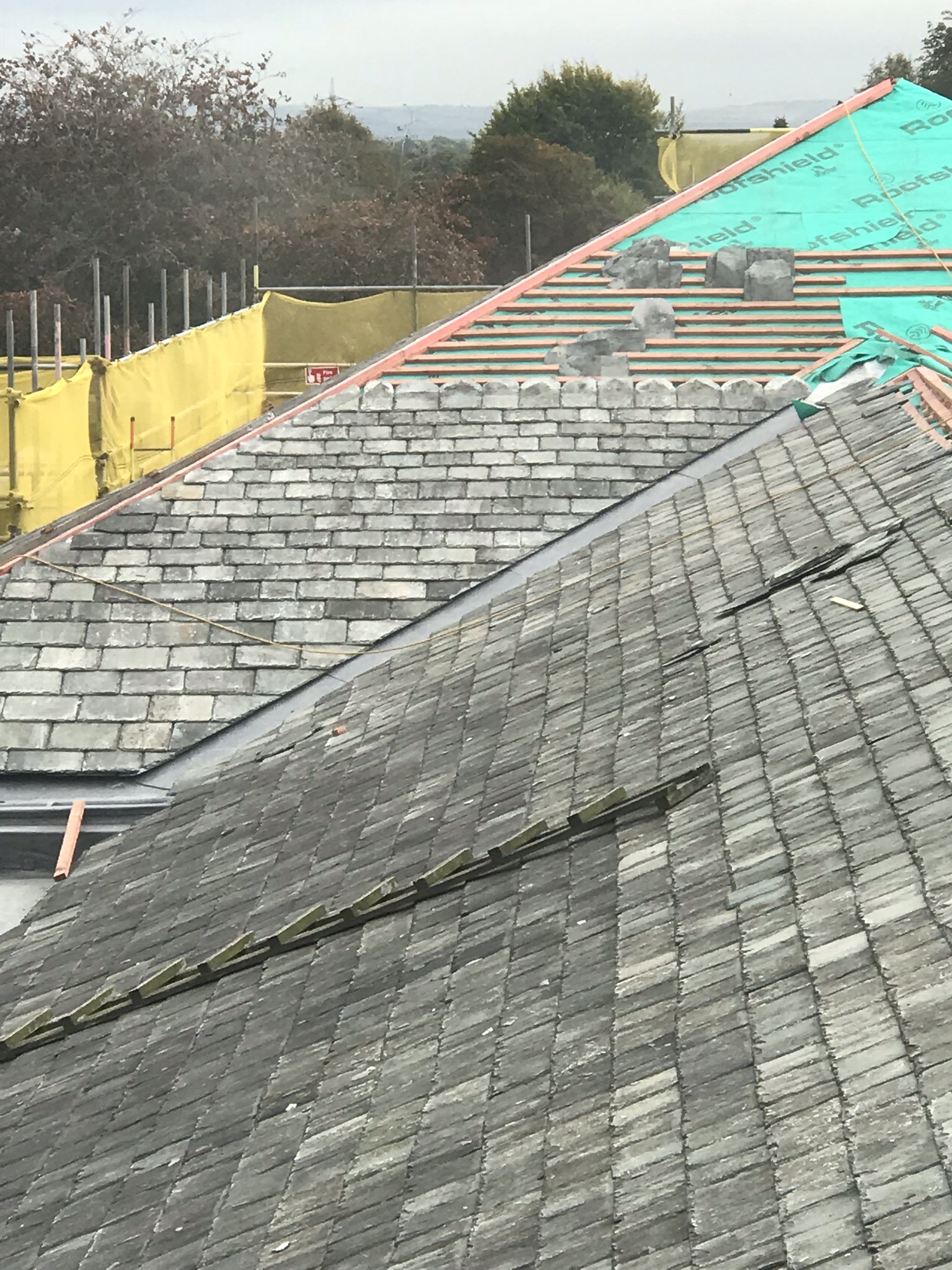
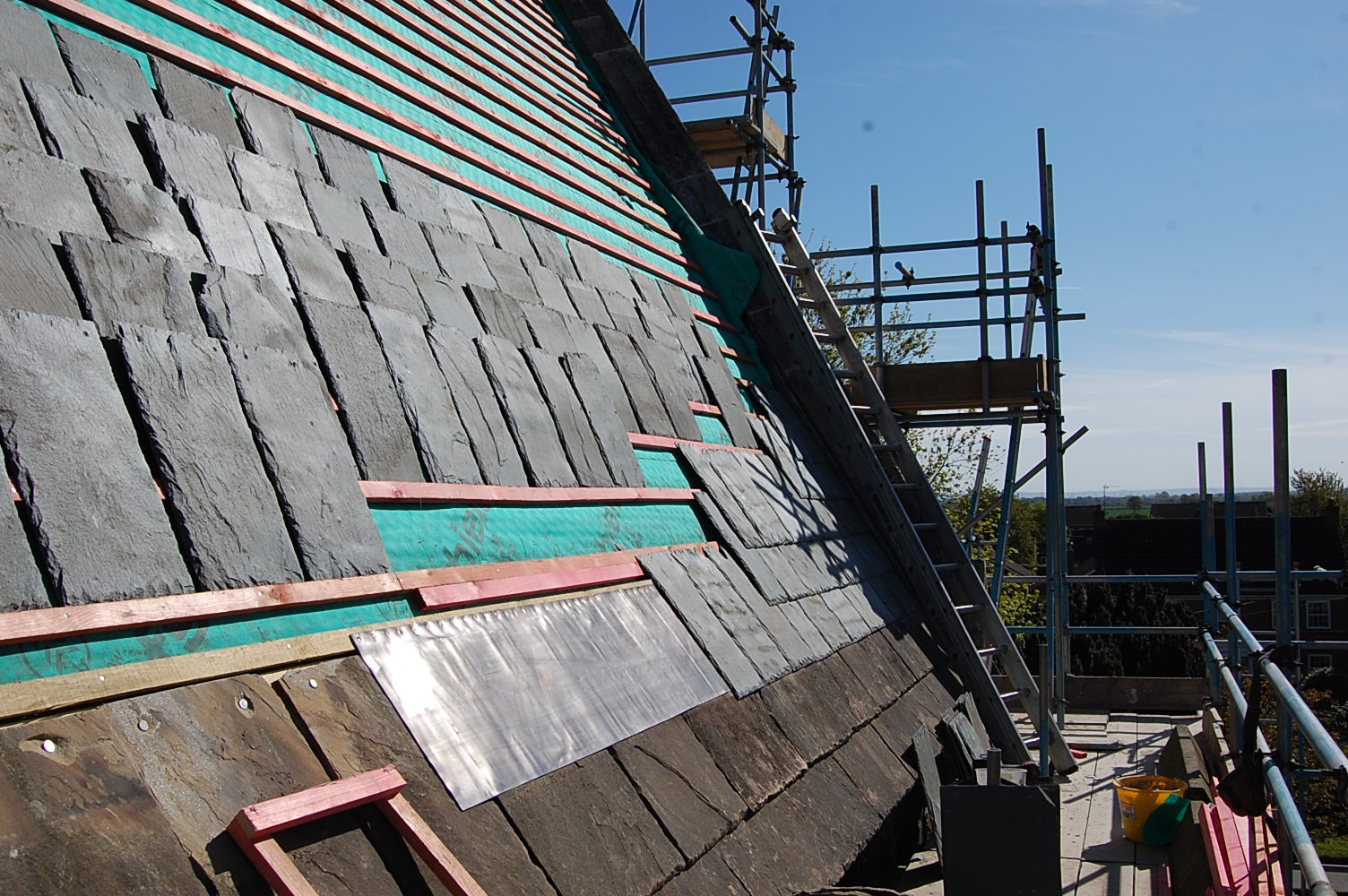
Unlike regular tally slating, where each course follows a repeatable size pattern, diminishing slate roofing is laid with slates that reduce in both width and length as the courses rise. The visual effect is elegant, balanced and unmistakably traditional. It gives a roof depth, movement and refinement that modern uniform coverings struggle to achieve.
Usually, the eaves course starts with the largest slates. From there, each course reduces in size as the work continues upwards. This method demands careful sorting, sound judgement and a skilled hand on site. It is not just a covering system. It is part of the craft of traditional slating.
In practical terms: diminishing slates are selected, graded and laid to suit the roof rather than forced into a rigid modern pattern. That is why they continue to suit heritage and high-value roofing so well.

Where diminishing slates are most often used
Roofs laid in diminishing courses tend to appear on buildings where a standard machine-led aesthetic would feel out of place. They are especially well suited to:
- Historic churches and chapels
- Civic and public buildings
- Hospitals and institutional structures
- Listed and conservation-sensitive projects
- High-specification residential properties
- Traditional stone slate roofs
Because of the labour involved, this style of work should be approached with the same care as any other premium traditional roofing application. It is not merely about ordering slate. It is about ordering the correct material, in the correct mix, for a roof that will look right when complete.
Westmorland and Burlington slates
Westmorland and Burlington slates remain two of the materials most commonly associated with diminishing-course roofing. Both bring weight, character and visual authority to a roof. Both also suit buildings where the finished work needs to feel grounded in tradition rather than simplified for speed.
Westmorland slate, with its distinctive green tone, is often seen on some of the finest traditional buildings in the country. Burlington slate, likewise, carries its own strong identity and continues to be specified where quality and heritage compatibility are key.
In each case, the real success of the roof depends not only on the slates themselves but also on the way they are selected, graded and laid.

Prestigious slate roofs rely on material selection, careful sorting and experienced fixing as much as they do on the slates themselves.
Matching existing roofs
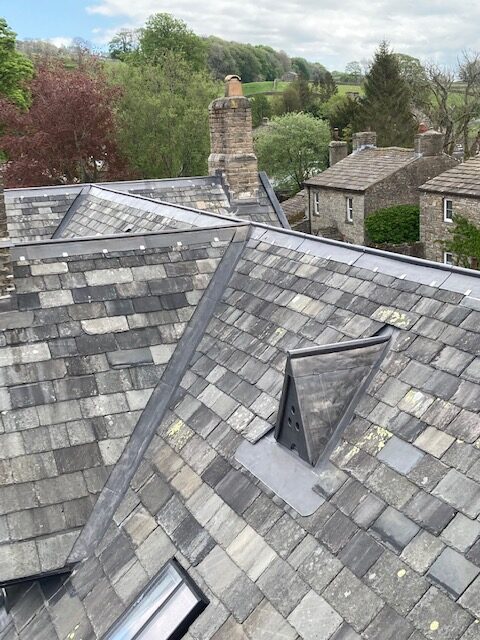
One of the strongest arguments for reclaimed diminishing slates is the need to match existing roof slopes as closely as possible. On a traditional building, even a technically sound repair can look completely wrong if the colour, thickness, grading or coursing feel out of character.
The Reclaimed Company regularly supplies reclaimed slates for projects where the new work must sit comfortably beside older roof areas. That includes institutional and public buildings where visual continuity matters as much as performance.
As with many traditional buildings, interface details on these projects are often formed in rolled lead sheet, helping the roof retain a properly detailed traditional finish.


Labour intensity and traditional skill
Diminishing slate roofing is labour intensive. That point should never be overlooked when pricing, programming or specifying the work. The number of slates on some roof areas can be substantial, but more importantly, the laying process itself demands far more judgement than standard regular coursing.
Sorting, gauging, selecting and setting out all take time. Waste also needs to be considered properly, especially on more complex roof forms or when working with reclaimed material. This is one reason the best results tend to come from contractors experienced in high-specification roofing and traditional slating methods.
Specification note: diminishing slate roofs should always be approached as a skilled traditional covering, not as a simplified variation of modern slate fixing.
Traditional slating still depends on proper fixing
However good the slates are, the roof will only perform when it is detailed and fixed correctly. That includes appropriate battens, correct headlaps, suitable fixings and compliance with recognised slating standards.
Stone slates and smaller-scale diminishing work
Diminishing courses are not confined to Westmorland or Burlington. The same principle also applies to many traditional stone slate roofs, where the finished covering depends on a natural reduction in slate size as the work rises. On smaller roof areas, reclaimed stone slates can produce a striking and deeply authentic finish that would be difficult to replicate with modern uniform materials.
This makes diminishing slating a broad traditional technique rather than a niche material choice. The method suits an array of heritage roofing applications, from large prestigious slopes to smaller carefully judged repairs.
How many slates will I need when laying diminishing courses?
Unlike tally slating, diminishing slates are not usually quantified per individual slate. Instead, the material is more commonly considered by the tonne. From there, you convert expected coverage into square metres to estimate the total tonnage required.
As a broad rule of thumb, and assuming a 3-inch headlap, around 18m² of roof area may be covered by 1 tonne of slate when working with Burlington slates diminishing from roughly 20 inches down to 10 inches.
That is only a guide. It does not allow for cutting waste, detailing losses, awkward roof geometry or the realities of reclaimed stock selection. In practice, a waste allowance should always be included. A common allowance is +10%, although reclaimed slates laid in diminishing courses may justify a greater margin depending on the roof and the material mix.
Costs of diminishing slates per tonne
Diminishing slates, particularly Westmorland and Burlington, can be expensive. Even reclaimed material commands strong values because the products are prestigious, limited in availability and demanding to install well. As a broad guide, the figures below help illustrate the kind of pricing that can be encountered in the market.
| Material | Reclaimed value guide | New value guide | Notes |
|---|---|---|---|
| Westmorland Slates | Circa £1,250 + VAT per tonne | Circa £2,800 + VAT per tonne | Premium green slate used on some of the finest traditional roofs. |
| Burlington Slates | From around £750 + VAT per tonne | Circa £1,520 + VAT per tonne | Still a premium traditional material, though often less costly than Westmorland. |
Always remember to add waste, haulage and project-specific cutting losses on top of any slate price. Labour, naturally, also forms a major part of the overall cost when diminishing courses are involved.
Why reclaimed diminishing slates remain attractive
Visual authenticity
Reclaimed slate often matches existing roofs more convincingly than new material ever could.
Sustainability
Reuse keeps valuable roofing stone in circulation and reduces waste from traditional buildings.
Economic sense
Even when reclaimed slate is premium priced, it can still compare well against new equivalents.
Listing on The Reclaimed Company
The Reclaimed Company is built around a straightforward idea: good second-hand materials still have value and deserve a second chance. That applies just as much to diminishing slates as it does to any other reclaimed roofing product.
The platform gives sellers an opportunity to place second-hand goods in front of a wide audience of buyers, whether they are local, national or international. It brings together salvage hunters, roofers, builders, dealers and property owners in one place, all with an active interest in reuse and reclamation.
If you have old slates to sell, especially traditional slates with genuine reuse value, they should not be treated as waste. They are part of a market, and in many cases they can return meaningful value when described and presented properly.
Traditional roofing materials retain real value, especially where the market needs sound reclaimed stock for matching and conservation work.
