

Belzona Products
Clear Breathable Masonry Sealer: Ultimate Guide to Waterproofing Brick & Stone
Sep
The Reclaimed Company® • Building Materials
Clear Breathable Masonry Sealer: The Ultimate Guide (Using Belzona 5122)
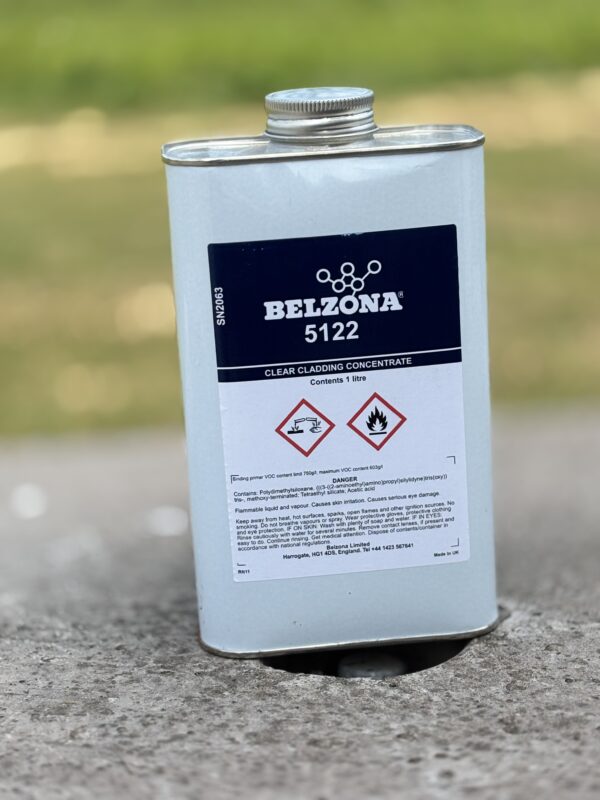
Everything you need to plan, apply, and maintain a clear breathable masonry sealer on brick, stone, and concrete—while keeping the natural look. This guide uses Belzona 5122 (Clear Cladding Concentrate) as the reference product.
What is a clear breathable masonry sealer?
A clear breathable masonry sealer is a water-repellent, vapour-permeable treatment for porous mineral substrates. Applied correctly, it penetrates the surface to form an invisible, microporous barrier that repels rain yet allows moisture vapour to escape, helping walls stay dry and durable without altering their appearance.
In this guide, we use Belzona 5122 (Clear Cladding Concentrate) to demonstrate dilution, coverage, and best-practice application.
- Great for: Brick, sandstone, limestone, concrete, reconstructed stone, and asbestos-cement.
- Finish: Invisible or clear, retaining the natural character of the substrate.
- Application: Brush or low-pressure spray in suitable ambient conditions.
- Drying: Typically touch-dry in around 2 hours, with optimum water-beading in around 24 hours.
Why choose a clear breathable masonry sealer?
- Breathable waterproofing: Keeps rain out while allowing moisture vapour to escape, which is especially valuable on traditional and solid-wall buildings.
- Natural look: Dries invisible with no obvious sheen or colour change on clean, sound porous surfaces.
- Helps durability: Reduces water uptake, discourages mould and algae, and limits freeze–thaw damage.
- Low-risk application: Cold-applied, with no need for hot works.
- Wide compatibility: Suitable across a broad range of mineral substrates and heritage facades.
Typical use-cases
- External walls and facades: Brick, block, stone or reconstructed stone.
- Chimneys and parapets: Helps reduce water ingress and staining around stacks and copings. Consider appropriate chimney cowls if the terminal is exposed.
- Ornamental stone and monuments: Discreet protection with an invisible finish.
- Pre-works on buildings needing repair: If the elevation shows cracked joints, slipped tiles or flashing issues, arrange roof repair in York or a local equivalent before sealing.
- Listed and historic fabric: For heritage-sensitive methods, see a specialist conservation contractor.
How to apply a clear breathable masonry sealer (step-by-step)
Method below references Belzona 5122.
- Inspect & repair: Rake out and repoint friable joints; fill holes and voids. Hairline cracks are usually fine, but open and fill cracks greater than 0.3 mm. Renew failed junction seals around doors, windows and flashings. If defects are roof-related, book a roof repair first.
- Clean thoroughly: Remove dirt, dust, salts and efflorescence. In coastal or salt-affected areas, use repeated water jetting until salts no longer re-appear after drying. Remove organic growth using an appropriate treatment and allow the surface to dry.
- Check substrate moisture: Apply only to dry or slightly damp surfaces, never saturated ones. Avoid use below 5 °C or where freezing is possible.
- Dilute the concentrate: For Belzona 5122, the standard mix is 1 litre concentrate to 9 litres clean water. For highly exposed, wind-driven rain or inclined surfaces, reduce water to 7 parts, giving a 1:7 ratio. Mix in a clean plastic bucket and use within 24 hours.
- Mask & protect: Protect glazing, vehicles, metals and adjacent finishes from drips and overspray. If working near chimney terminals, check the condition of terminals and cowls first.
- Apply bottom-up: Using a long-bristle masonry brush or low-pressure spray, start at the lowest area and work upwards, allowing runs to flood into untreated zones below. Aim for full, even saturation without dry patches.
- Allow to dry: Typical dry time is about 2 hours, with full water repellency in around 24 hours. Avoid rain during application and drying.
- Post-checks: Water should bead and shed on exposure to rain. If beading is uneven, review cleaning and porosity, then spot-treat any missed areas.
Tip: If pausing mid-job, clearly mark the last treated section so you do not miss a band when you resume. The coating is invisible once dry.
Coverage rates (plan your materials)
Coverage depends on porosity. The table below shows typical targets per litre of diluted product when using a clear breathable masonry sealer like Belzona 5122.
| Substrate | Typical coverage (per L diluted) | Per 1 L concentrate @1:9 (≈10 L diluted) | Per 1 L concentrate @1:7 (≈8 L diluted) |
|---|---|---|---|
| Smooth concrete / smooth brick / asbestos-cement | ≈ 2.6 m²/L | ≈ 26 m² | ≈ 20.8 m² |
| Rough concrete / soft brick | ≈ 1.3 m²/L | ≈ 13 m² | ≈ 10.4 m² |
| Natural stone (range) | ≈ 1.5–2.1 m²/L | ≈ 15–21 m² | ≈ 12–16.8 m² |
Quick planning examples
- Exposed soft brick, 65 m² elevation → at 1:7 you’ll need ≈ 65 ÷ 10.4 ≈ 6.3 L concentrate (round up to 7 L).
- Mixed stone facade, 120 m² at mid-range 1.8 m²/L → at 1:9 you’ll need ≈ 120 ÷ 18 ≈ 6.7 L concentrate (round up to 7 L).
- Smooth concrete soffits, 50 m², sheltered → at 1:9 you’ll need ≈ 50 ÷ 26 ≈ 1.93 L concentrate (buy 2 L).
Always trial a small area first. Highly porous substrates can consume more material than planning figures suggest.
Performance snapshot
- Water uptake reduction: Clear breathable masonry sealer treatments can dramatically reduce capillary absorption on brick and stone.
- Chloride ingress resistance: Helps limit salt transport into concrete compared with untreated surfaces.
- Breathability: The microporous film allows air and water vapour to pass, helping avoid trapped moisture.
Compatibility & overcoating
Treated surfaces generally stay cleaner and need less maintenance. Overpainting is usually unnecessary, but if you plan to paint later, especially with water-based coatings, carry out a small compatibility test patch first.
Troubleshooting & pro tips
- Patchy beading: Usually cleaning or porosity related. Re-clean and spot-treat highly absorbent or missed areas.
- White staining or ghosting: Stop, allow to dry fully, and confirm you did not apply to a wet surface. Correct prep avoids this.
- Early rain risk: Avoid application if rain is imminent. Protect fresh work until dry, typically around 2 hours.
- Salt efflorescence returns: Repeat water-jet cleaning cycles and only treat once salts no longer re-appear after drying.
Ready to order?
We stock Belzona 5122 for fast dispatch UK-wide. Order online or speak to our team for project-planning help.
Pro tip: On large, exposed elevations consider the 1:7 dilution for extra resistance to wind-driven rain.
Clear breathable masonry sealer — FAQs
Will it change the colour or sheen of my brick or stone?
No. On properly prepared, sound porous substrates a clear breathable masonry sealer dries invisible, retaining the natural appearance.
Is it breathable?
Yes. The treatment forms a microporous barrier that repels liquid water yet allows air and water vapour to pass, making it well suited to traditional fabric.
When should I choose 1:7 instead of 1:9 dilution?
Use 1:7 on highly exposed or inclined surfaces subject to wind-driven rain. Otherwise, 1:9 is the standard dilution.
How soon does it work?
Surfaces typically dry in around 2 hours, with optimum water beading developing within around 24 hours depending on conditions.
Can I paint over it later?
Usually not required. If painting is desired, trial a small patch first to check compatibility, especially with water-based paints.
Does it stop damp from the inside?
No. Exterior water-repellent treatments do not solve internal sources of damp such as leaks or rising damp. Those need separate diagnosis and repair.
